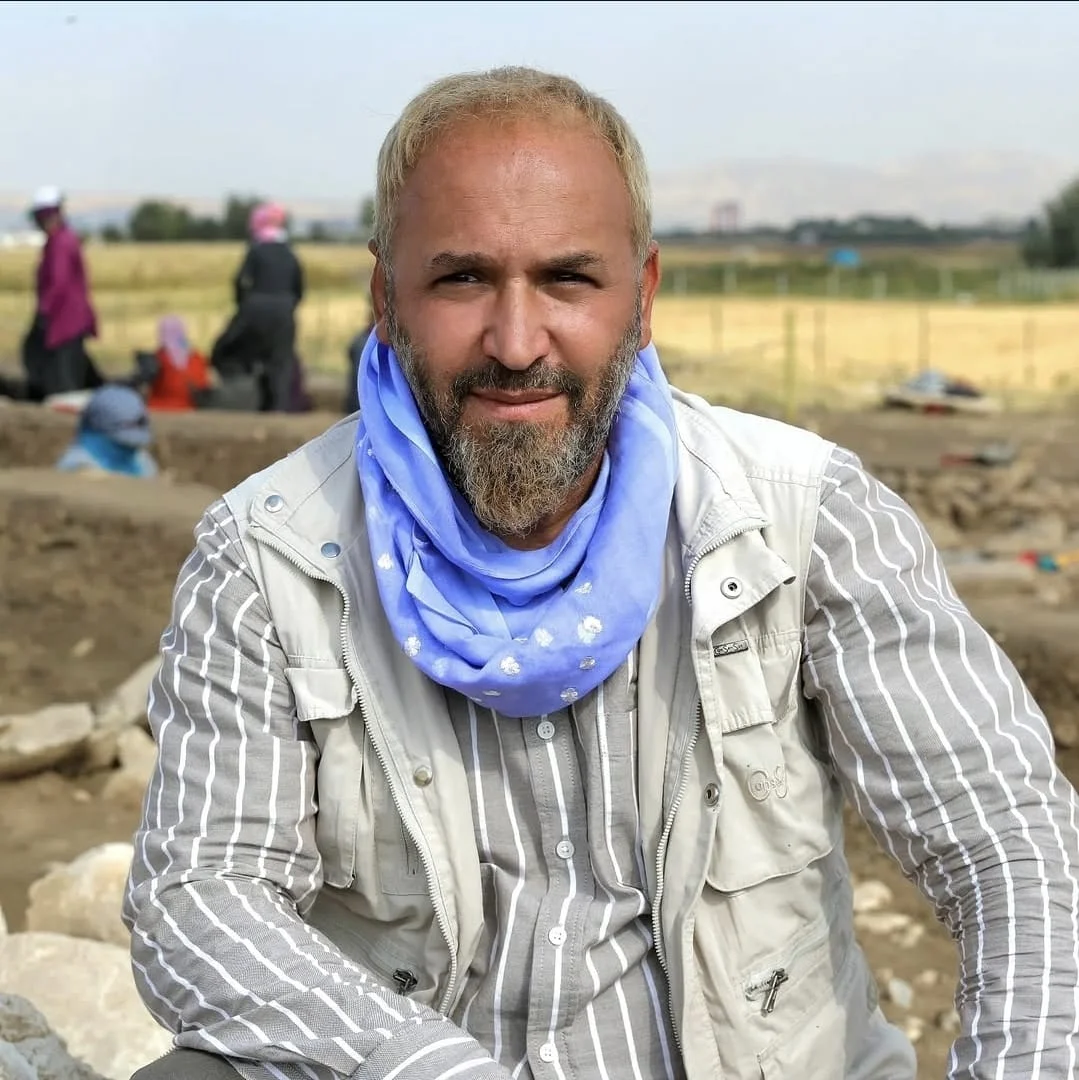
Among the new generation of representatives of Turkish archaeology, Assoc. Prof. Dr. Dr. Savaş Sarıaltun is known for his interdisciplinary studies combining prehistoric archaeology, Neolithic Period architecture, settlement and landscape archaeology, archaeometry, physical geography, and cultural heritage management. Integrating his long-standing fieldwork experience with education across various scientific fields, Sarıaltun's research focuses particularly on the prehistoric cultures of Upper Mesopotamia, the South Caucasus, and Eastern Anatolia.
Born in Batman in 1979, Savaş Sarıaltun completed his secondary education at İzmir Karşıyaka Anatolian High School. He then graduated from the Department of Classical Archaeology in the Faculty of Letters at Istanbul University. During his undergraduate studies, he served as a student assistant at the university's Prehistory Laboratory. Thus, even during his student years, he became directly involved in prehistoric archaeology, artifact evaluation, and laboratory work. Beginning with his training in Classical Archaeology, this path proved decisive in directing him toward Near Eastern prehistoric archaeology and Neolithic Period studies, which would eventually become the centerpiece of his research.
Following his undergraduate degree, Sarıaltun completed his master's degree at the Department of Archaeology at Çanakkale Onsekiz Mart University, writing his master's thesis titled "Halaf Period Architecture and Pottery at Kerküşti Höyük." Jointly evaluating the Halaf Period architecture and ceramic repertoire through the data from Kerküşti Höyük, this study established the scientific foundation for his subsequent research into the prehistoric cultures, settlement systems, and material culture traditions of Upper Mesopotamia.
Continuing his academic specialization in France, Sarıaltun completed his doctorate in Prehistory at Paris Nanterre University within the Préhistoire et Technologie Laboratory (CNRS–UMR 7055) with his dissertation titled "The Neolithic Architectural Structures and Cultural Landscape of Sumaki Höyük." In this research, he addressed Neolithic architecture not only through building typologies, but also in the context of production technologies, spatial organization, cultural landscape, and microarchaeology.
Grounded in the principle that archaeological settlements must be evaluated not only through cultural processes but also alongside the natural environment in which they developed, Sarıaltun extended his studies into physical geography, earning a second doctorate—this time in Geography—at the Department of Geography at Çanakkale Onsekiz Mart University with his dissertation titled "The Impact of Geomorphological Features on Archaeological Settlements in the Lower Garzan Basin." Thus, he expanded his interdisciplinary research framework, which evaluates archaeological data alongside geomorphology, landscape, and environmental processes, onto a broader scientific foundation.
A key characteristic of Savaş Sarıaltun's scientific identity is his approach of bridging diverse disciplines around shared archaeological questions. His work across prehistory, Neolithic architecture, archaeometry, settlement and landscape archaeology, cultural heritage management, physical geography, and GIS relies on evaluating prehistoric communities not just through their material culture, but in conjunction with their living environments, technologies, and spatial systems.
Throughout his years of fieldwork across various regions of Turkey, Sarıaltun has participated in numerous archaeological projects, working at sites such as Menekşe Çatağı, Akarçay Tepe, Ege Gübre, Kerküşti Höyük, Akziyaret Tepe, Sumaki Höyük, and Çemialo Sırtı. Within the scope of the Ilısu Dam Project, he took on roles as coordinator and field manager, particularly at Sumaki Höyük and Çemialo Sırtı, acquiring extensive field experience regarding the architecture, stratigraphy, and spatial organization of prehistoric settlements.
Extending his research beyond the borders of Turkey, Sarıaltun served as Responsable des Opérations in the French-Azerbaijani joint initiative Mission Archéologique du Bassin de l’Araxe in Nakhchivan, directing field operations for the excavations at Şorsu Tepe, Çayağzı, and Başyurt. He worked as an architectural specialist at Ovçular Tepe and contributed archaeo-sedimentological evaluations to research at Kültepe. These projects allowed him to evaluate prehistoric cultural connections among Anatolia, Upper Mesopotamia, and the South Caucasus from a comparative perspective.
Savaş Sarıaltun's connection to Çayönü Tepesi began long before he assumed the excavation directorship in 2024. His initial encounter with Çayönü Tepesi was during site landscaping works in 2001. Serving for many years as field manager at Çayönü Tepesi during the resumed research led by Prof. Dr. Aslı Erim-Özdoğan, Sarıaltun took direct responsibility for the site's stratigraphy, architectural phases, excavation methodology, and field organization. The fieldwork experience he gained during this period formed a crucial foundation for bridging new research questions with the scientific legacy inherited from Çayönü's long history of investigation.
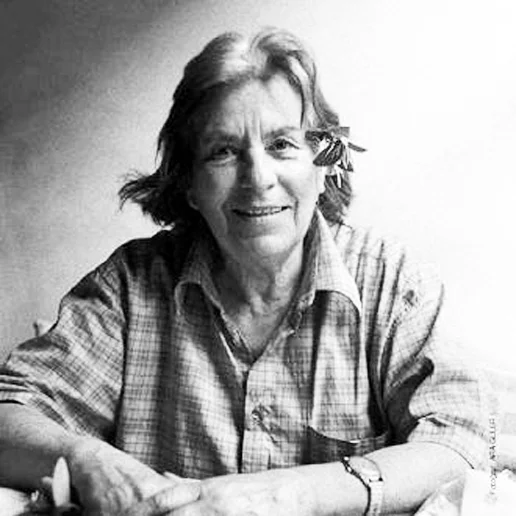
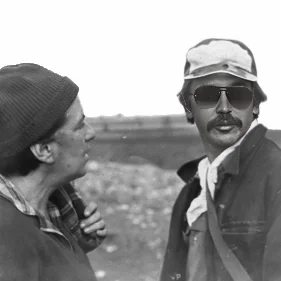
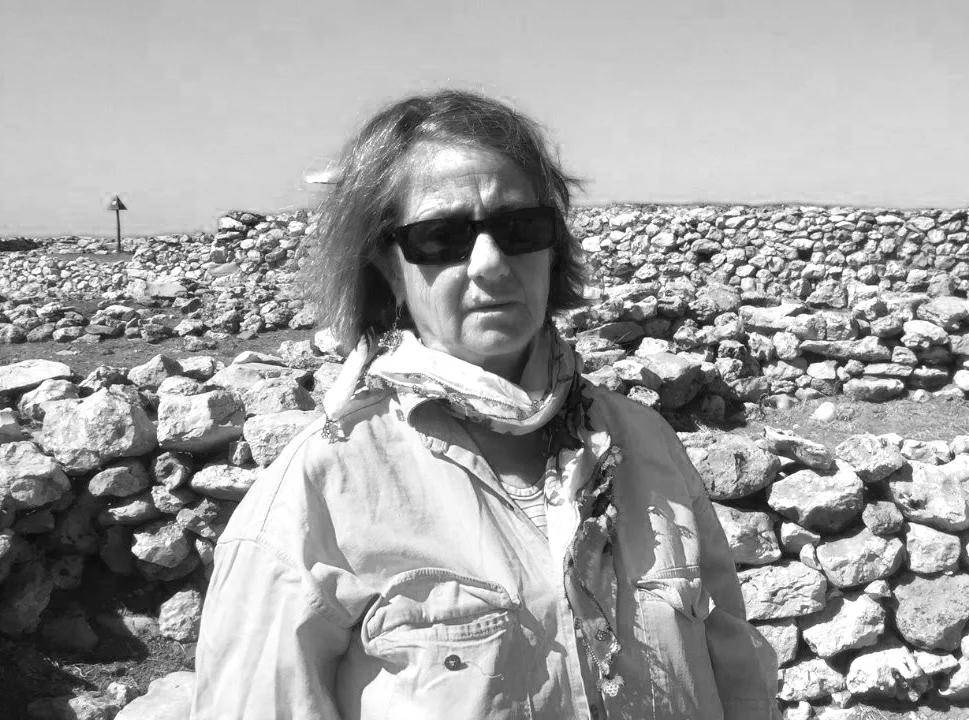
With his assumption of the Directorship of the Çayönü Tepesi Excavation and Research Project in 2024, the fourth research era commenced in Çayönü's scientific history spanning over sixty years. Thus, Çayönü's distinct tradition of scientific succession continued once more: Mehmet Özdoğan, trained under Halet Çambel; Aslı Erim-Özdoğan, who managed field operations during Mehmet Özdoğan's directorship; and Savaş Sarıaltun, who served as field manager during Aslı Erim-Özdoğan's directorship, each eventually taking over as excavation director. This sequence stands as a defining feature that makes Çayönü a unique school of archaeology where knowledge and field experience are directly handed down across generations.
In this new period, Çayönü research is being restructured around problem-oriented archaeological excavations, interdisciplinary analyses, and digital documentation methods, while preserving the scientific heritage inherited from past eras. Geophysical surveys, photogrammetry, 3D documentation and reconstruction, archaeometric analyses, bioarchaeology, geoarchaeology, and environmental studies are among the primary research tools utilized to holistically evaluate Çayönü's multi-layered archaeological record.
One of the key goals of this new era under Sarıaltun's leadership is developing Çayönü not merely as an excavation site where scientific research is conducted, but as a protected, vibrant, educational, and publicly shared cultural heritage site. Accordingly, excavations and research are carried out alongside conservation practices, digital documentation, educational programs, local community engagement, cultural heritage management, and the enhancement of visitor infrastructure.
Enhancing the public visibility of Çayönü Tepesi, developing its institutional identity, and raising cultural heritage awareness at the local level are also among the primary components of this period. Transforming Çayönü into an official Archaeological Site featuring modern conservation and visitor infrastructure, and in the long term, preparing it for the UNESCO World Heritage nomination process by preserving its scientific and cultural values, represent the primary goals of the new era's cultural heritage vision.
The period led by Assoc. Prof. Dr. Dr. Savaş Sarıaltun at Çayönü aims to preserve this scientific legacy of over sixty years and carry it into the future using new research methods. In this framework, Çayönü is treated not just as an archaeological settlement where the past is investigated, but as a living research center where scientific production, education, cultural heritage conservation, and public sharing flourish together.